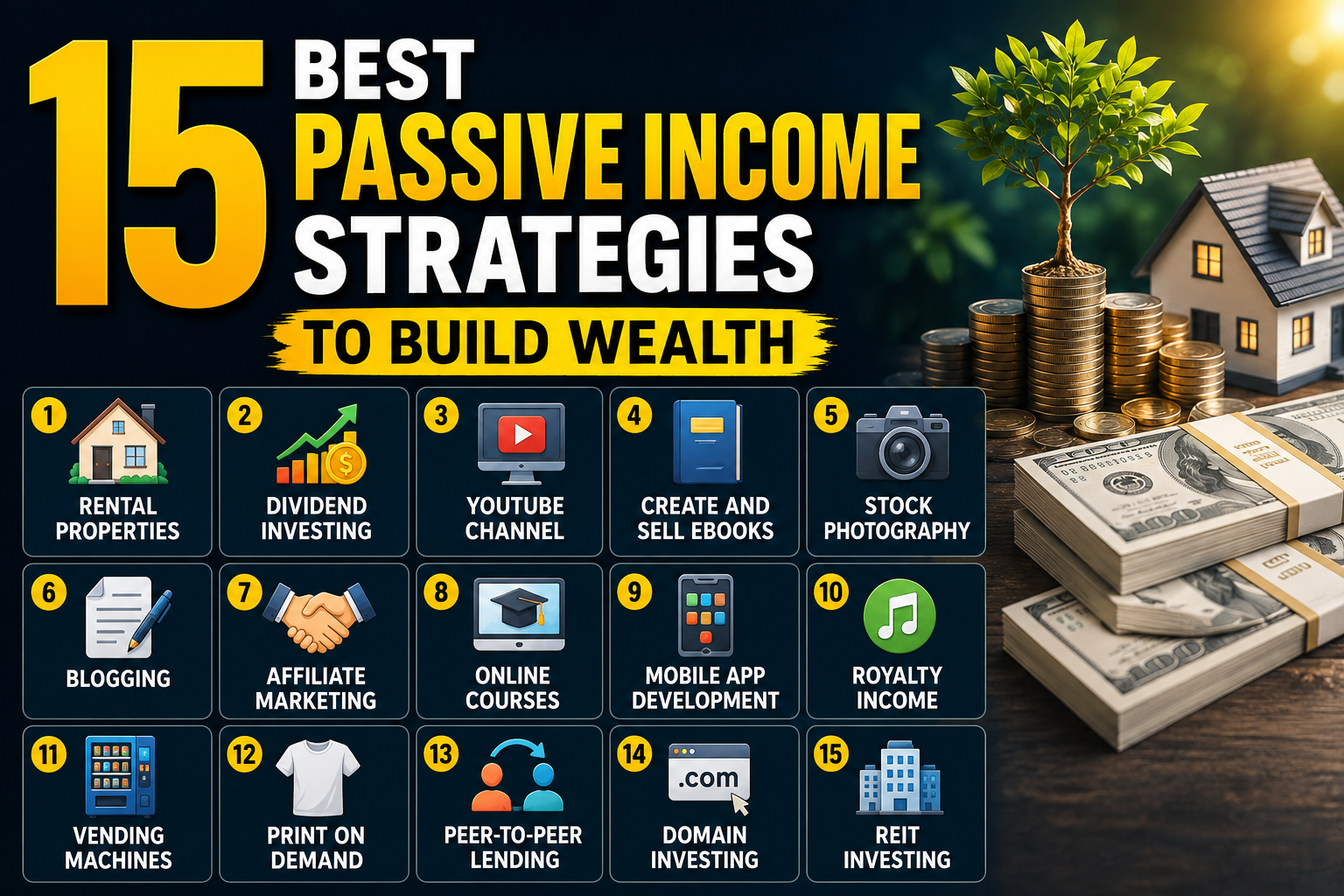
We’ve all seen those “get rich quick” ads—the ones featuring someone on a beach with a laptop, claiming they made ten thousand dollars while sleeping. It sounds like a dream, doesn’t it? But let’s be honest: true passive income strategies aren’t about magic buttons or overnight success.
Building a reliable secondary income requires an upfront investment of either time or money. The goal isn’t to avoid work entirely, but to decouple your earnings from your hours. Whether you’re looking to pad your savings or eventually transition out of the 9-to-5 grind, choosing the right path is essential. In this guide, we’ll break down realistic ways to build wealth that actually work in today’s economy.
What Exactly is Passive Income?
Before we dive into the list, let’s clear up a common misconception. Passive income is money earned from an enterprise that doesn’t require “material involvement” on a daily basis.
Important Note: “Passive” does not mean “zero effort.” It means “deferred effort.” You build the engine now so it runs on its own later.
The Two Pillars of Passive Revenue
- Capital-Intensive: You use your existing money to make more money (e.g., dividend stocks, real estate).
- Labor-Intensive: You use your time and skills to create an asset that sells repeatedly (e.g., writing an e-book, creating a course).
1. High-Yield Savings and Digital Banking
If you have cash sitting in a traditional checking account, you’re essentially losing money to inflation. One of the simplest passive income strategies is moving that cash into a High-Yield Savings Account (HYSA).
- How it works: Digital banks offer significantly higher interest rates than brick-and-mortar banks because they have lower overhead costs.
- The Perk: It is 100% liquid. You can access your money whenever you need it.
- Realistic Expectation: This won’t make you a millionaire, but it’s the safest way to ensure your “emergency fund” is working for you.
2. Dividend Growth Investing
Dividend investing is a favorite for those who want a “set it and forget it” approach. When you buy shares of profitable companies, they often share a portion of those profits with you in the form of dividends.
Why Dividend Stocks Work:
- Compound Interest: If you reinvest your dividends, your portfolio grows exponentially.
- Stability: Large, established companies (often called “Dividend Aristocrats”) have a history of increasing payouts for 25+ years.
- Diversification: You can buy Dividend ETFs (Exchange Traded Funds) to spread your risk across hundreds of companies at once.
3. Real Estate and REITs
Real estate has long been the backbone of wealth creation. However, not everyone wants to be a landlord at 2:00 AM when a pipe bursts.
Physical Property
If you have the capital, buying a rental property provides monthly cash flow and long-term appreciation. However, this requires significant management.
Real Estate Investment Trusts (REITs)
If you want the benefits of real estate without the headaches of property management, REITs are the answer. These are companies that own or finance income-producing real estate. By buying shares of a REIT, you receive a portion of the rent collected.
4. Creating Digital Products
In the digital age, your expertise is an asset. Creating a product once and selling it thousands of times is the ultimate scalability.
- E-books: Self-publishing on platforms like Amazon Kindle Direct Publishing (KDP) allows you to reach a global audience.
- Online Courses: If you are an expert in a niche—whether it’s coding, gardening, or accounting—platforms like Udemy or Teachable allow you to host your content.
- Print-on-Demand: Design t-shirts or mugs and let a third party handle the printing and shipping.
5. Peer-to-Peer (P2P) Lending
P2P lending platforms allow you to act like the bank. You lend your money to individuals or small business owners, and they pay you back with interest.
- Risk Management: Most platforms allow you to spread your investment across hundreds of “micro-loans” to minimize the impact if one person defaults.
- Returns: Usually higher than a savings account but lower than the aggressive stock market.
6. Content Creation and AdSense
Building a blog or a YouTube channel is perhaps the most rewarding labor-intensive strategy. By providing value to an audience, you can monetize through the Google AdSense program.
How to Stay AdSense Compliant:
- Originality: Always write for humans first, not just search engines.
- Trustworthiness: Provide cited facts and clear, helpful advice.
- Consistency: Regularly updating your content keeps your “passive” engine running.
7. Automated E-commerce (Dropshipping)
While dropshipping requires some customer service, much of the process can be automated. You list products from a supplier; when a customer buys, the supplier ships it directly to them.
- Low Barrier to Entry: You don’t need to hold inventory.
- The Catch: Profit margins can be slim, and marketing costs can be high. It’s best to focus on a specific niche rather than a general store.
8. Renting Out Your Assets
Do you have a spare room? A car that sits in the driveway? A high-end camera?
- Airbnb: Renting a room or your whole home.
- Turo: Renting your vehicle when you aren’t using it.
- Fat Llama: Renting out niche equipment like drones or power tools.
Comparison of Popular Strategies
| Strategy | Effort Level | Risk Level | Potential Return |
| HYSA | Very Low | Very Low | Low (3-5%) |
| Dividend Stocks | Low | Medium | Moderate (7-10%) |
| Rental Property | High | Medium | High |
| Digital Products | High (Initial) | Low | Very High |
| REITs | Low | Medium | Moderate |
Expert Tips for Success
- Don’t Put All Your Eggs in One Basket: Diversification is your best friend. If your blog traffic drops, your dividend income can pick up the slack.
- Focus on the Long Term: Most passive income strategies take 6–12 months before you see a single cent. Patience is mandatory.
- Minimize Fees: Whether it’s brokerage fees or platform commissions, keep your costs low to maximize your take-home pay.
Frequently Asked Questions (FAQ)
How much money do I need to start building passive income?
It depends on the strategy. You can start dividend investing with as little as $10. However, for real estate, you might need thousands for a down payment. If you have $0, focus on labor-intensive tasks like blogging or YouTube.
Is passive income truly “hands-off”?
Rarely. Most streams require “maintenance.” For example, a blog needs periodic updates, and a rental property needs occasional repairs. Think of it as “low-maintenance” rather than “no-maintenance.”
Are there risks involved in these strategies?
Yes. Stocks can go down, tenants can stop paying rent, and search engine algorithms can change. Never invest money you cannot afford to lose.
How is passive income taxed?
In many regions, passive income (like dividends or capital gains) is taxed at a different rate than your regular salary. It’s always best to consult with a tax professional in your specific area.
Can I quit my job immediately?
We don’t recommend it. Most experts suggest waiting until your passive income covers at least 150% of your monthly expenses to account for taxes and market fluctuations.
Final Thoughts
Building sustainable passive income strategies is a marathon, not a sprint. It’s about building a future where you have the freedom to choose how you spend your time. Start small, stay consistent, and focus on providing value to others.
If you found this guide helpful, consider bookmarking it as you begin your journey toward financial independence. Success doesn’t happen overnight—but it does happen if you start today.
Internal & External Linking Suggestions:
- Internal Link Idea: “Check out our guide on [Budgeting for Beginners] to save your first $1,000 for investing.”
- External Reference: For more on market trends, visit [Investopedia] or [The Motley Fool].
- External Reference: To understand the legal side of small businesses, check out the [Small Business Administration (SBA)] website.